
Eclipse on the Camino
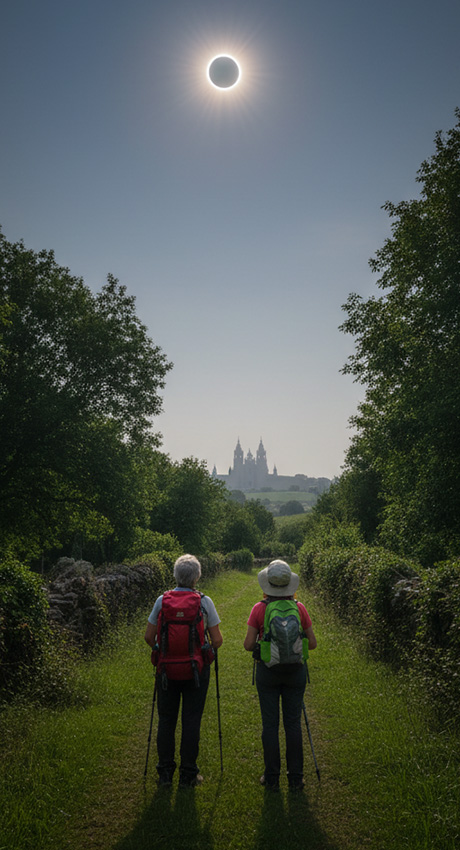
A Camino week when the sky is part of the story
If you’ve been thinking about walking the Camino “one day,” this is the kind of date that makes you circle the calendar. On Wednesday, August 12, 2026, a total solar eclipse crosses northern Spain. And if you’re anywhere near Lugo that evening, you’re looking at complete darkening of the sky — not a “kinda dark” partial eclipse. If you haven't experienced this before, it is a sight to behold. And to top it off, just a few nights later, you'll be rewarded with the Perseid meteor shower in mid-August, which gives you a second reason to step outside after dinner and look up.
That pairing — one big daytime (well, late-evening) moment, one quiet nighttime one — fits the Camino better than you might expect. You’re already living in a simpler rhythm: walk, arrive, rest, eat well, sleep. You don't have to worry about timing your walk. When the magic happens overhead, you’re not squeezing it into your walking day. You’re already there.
For this special departure, we have pre-booked a limited number of rooms along the last 100Km to Santiago (the classic final stretch) to give you the opportunity to walk during this special time. And you’ll do it in a way that keeps the focus on your walk: private rooms booked ahead, daily luggage transfer, and support you can reach day or night if something comes up.
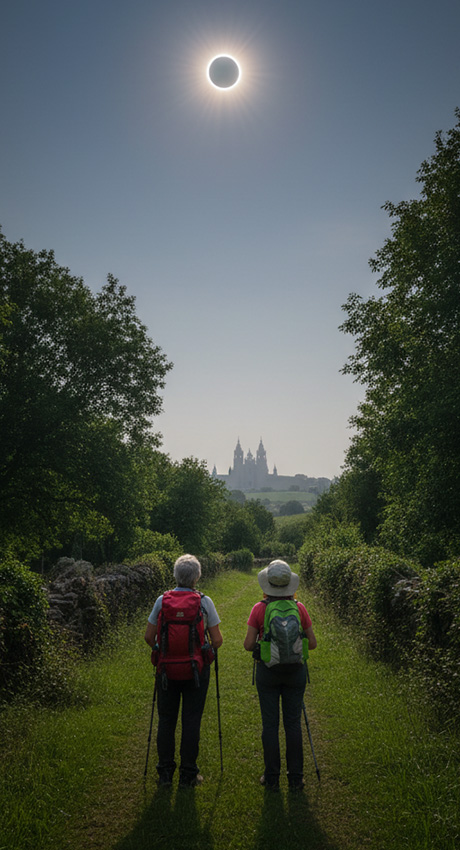
What the August 12, 2026 eclipse is really like (and how long it lasts)
A total solar eclipse has two parts: the slow build — and the short stretch that people travel across the world to see. Most of the eclipse is a gradual partial phase. The moon takes a “bite” out of the sun and keeps going. You’ll notice the light changing, but you’re not glued to the sky for two hours. It’s more like a quiet build in the background while you’re with other pilgrims, taking photos, and feeling that “something’s happening” energy.
Then comes totality — the moment the moon fully covers the sun. And it only happens if you’re in the path of totality (it’s a narrow strip; outside it you’ll only see a partial eclipse).
In the region where you will be, the timing is late and dramatic in the best way:
- Partial eclipse begins: about 7:31 p.m. (local time)
- Maximum eclipse: about 8:28 p.m.
- Totality: about 1 minute 24 seconds
- Partial eclipse ends: about 9:22 p.m.
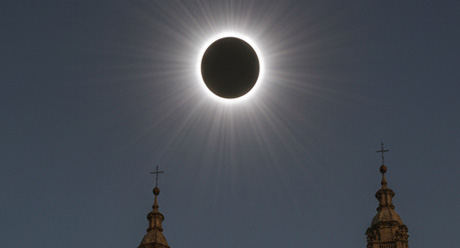
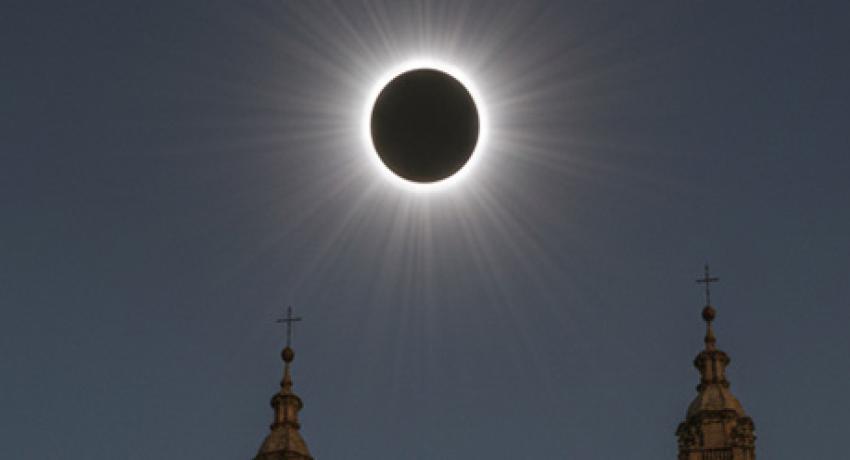
That means you get the full build-up in the early evening — then a minute-and-a-half where the world shifts tone. And what does it feel like? Not flashy. Not fireworks. More like the day briefly changes its rules. Light can look thinner. Shadows get strange. The air can cool a little. People who’ve been chatting for miles suddenly go quiet. If the sky is clear, you may see the sun’s corona — that soft halo that doesn’t show up in everyday life. It’s powerful because it’s real, and because you can’t replay it once it’s over.
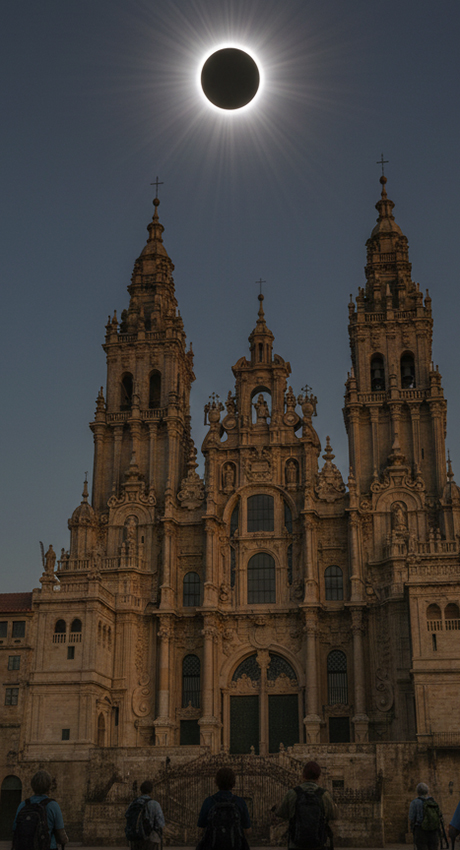
Why it’s so perfect to experience this on the Camino
The Camino is already good at creating “pause” moments. You’re walking, you’re noticing small details again, and your days have a shape that feels human. That’s why the eclipse works so well here:
- You’re already outdoors, often near open farmland, village edges, and wide horizons — great settings for sky-watching.
- You can enjoy the moment instead of managing the day. Booking your room ahead of time takes all the stress out of your trip. These dates are very much in demand, there will not be room at a moment's notice so you have to book ahead.
- It turns into a shared Camino memory. An eclipse is one of those rare things that turns strangers into a little community for a few minutes. And the practical side stays simple. Many travelers leave their main bag by around 8:00–8:30 a.m., and it’s typically delivered to the next stop by mid-afternoon — so you walk with a light daypack and still arrive with time to settle in. If you want the nuts and bolts of how that works, this is the clearest guide: Luggage Transportation on the Camino de Santiago: A Guide for Pilgrims
The Perseids add a second kind of wonder
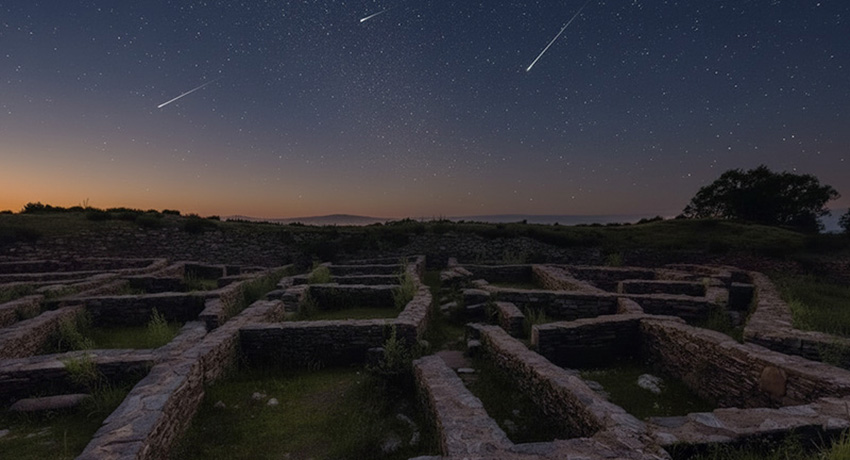
After the eclipse, the sky gives you an encore over the next few nights: the Perseids meteor shower, active in mid-August. Here’s the Camino-friendly way to enjoy it: Finish your walk. Shower. Put your feet up. Eat a relaxed dinner. Then step outside for ten minutes. Bring a light layer. Let your eyes adjust. If the night’s clear, you’ll catch a few shooting stars— fast streaks that make everyone do the same thing: point, smile, and go quiet again. You don’t need to be a professional stargazer. You just need to give yourself permission to linger. The Camino environment, far from the big city lights, is the perfect setting to see this phenomenon.
“We told ourselves we’d go out for five minutes… and then we stayed until the sky went still.”
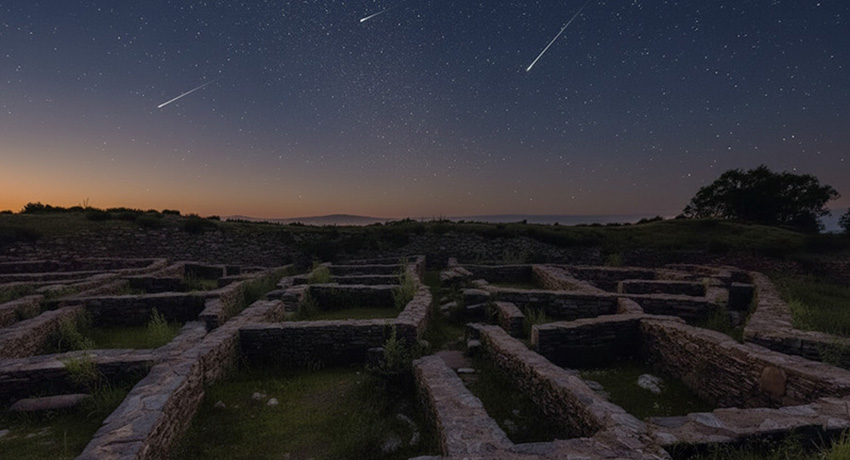
Lugo to Santiago: the final stretch, timed for an extraordinary week
The Last 100Km from Lugo are especially appealing because you can walk in comfortable stages while still arriving in Santiago with that “I really did it” feeling. Given the high demand, we have reserved a limited number of accommodations for this trip, which will be allocated on a first-come, first-served basis. See the exact itinerary and sign up here: Eclipse Camino tour from Lugo to Santiago.
How to walk mid-August comfortably (and still have energy to enjoy the evenings)
August can be warm. The trick is not to tough it out — it’s to keep your routine smart and simple. Get an early start. You’ll enjoy the cooler hours, and you’ll arrive with time to shower, rest, and actually enjoy the town you’re in. Keep your pack light. You’ll feel the difference immediately, especially in summer. With luggage transfer, your daypack can carry just the basics: water, a layer of clothes, a snack. Drink before you’re thirsty. Make it a habit — small sips whenever you stop, refills when you pass a café, and a short pause in the shade when you see it.
Why this is a genuinely rare opportunity
You’ll hear people ask, “When’s the next one?” And the honest answer is: there won’t be another total solar eclipse on the Camino for many years. Total eclipses happen somewhere on Earth every year or two, but that doesn’t mean they happen where you actually want to be. The path is narrow, the timing matters, and good viewing weather is never guaranteed. So when a total eclipse lines up with a week on the Camino — in a region with open skies and a natural daily rhythm — it’s worth paying attention.
That’s the real appeal: you’re not building an entire trip around a few minutes in the sky. You’re choosing to complete your Camino journey — and then letting a rare celestial event elevate the week. When you reach Santiago, you’ll still experience the magic of the Camino: the final walk into the city, the cathedral, the emotion of the finish.
And yes, you can receive your Compostela certificate at the end. You’ll just have one more layer to your story: you were walking to Santiago in the week the daylight changed — and a few nights later, the sky put on an encore. If you want the simple step-by-step for the certificate, here it is: How to get your Compostela pilgrim certificate
Don't Delay!
Space is limited, so take a look at the itinerary and sign up today by clicking here.
Buen Camino, friends.