
Camino de San Antonio
Before I walked the Camino de San Antonio, I had a surprisingly hard time finding practical information about how it actually works. Most articles focused on the history of the missions, but very few explained where to start, how the passport system works, where to get stamps, or how to get back to your car afterward.
Having read about this Camino-inspired journey in the US, I was curious to experience what it is like. I decided to walk it myself in May 2026 and share the kind of guide I wish I had found beforehand:
What is the Camino de San Antonio?
The Camino de San Antonio is a 13-mile pilgrimage route in San Antonio, Texas that connects the historic Spanish Catholic missions along the San Antonio River before finishing at San Fernando Cathedral downtown.
The walk is inspired by the Camino de Santiago in Spain, and pilgrims can collect stamps along the route in an official credential (pilgrim passport). Completing the route also earns pilgrims 30 kilometers of official distance credit toward the Camino Inglés in Spain.
When I Walked It
I walked the route during the second week of May 2026 and the first thing I can tell you is this: San Antonio is hot. Really hot.
I started walking at 7:00 AM and was very glad I did because temperatures climbed quickly as the morning went on.
If you plan to walk this route anytime from late spring through early fall, start as early as possible and bring much more water than you think you’ll need.
Where I Started
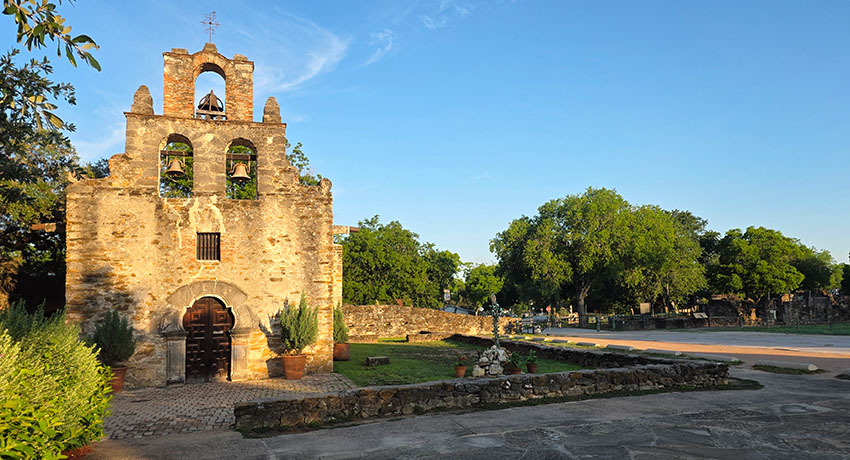
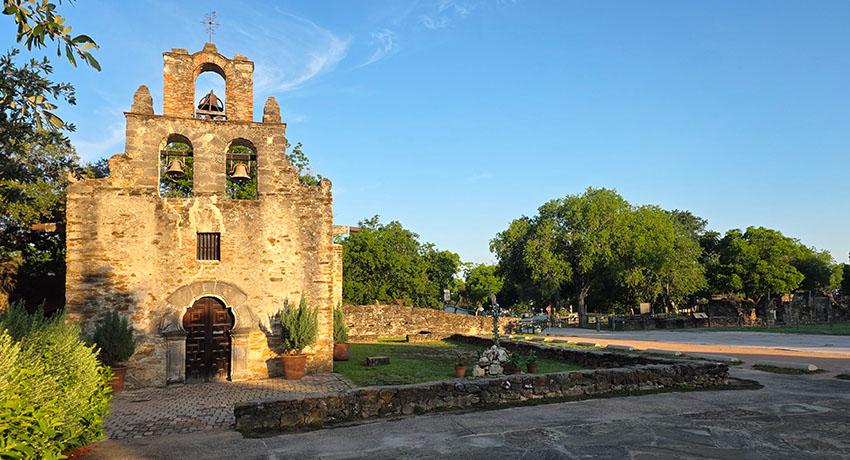
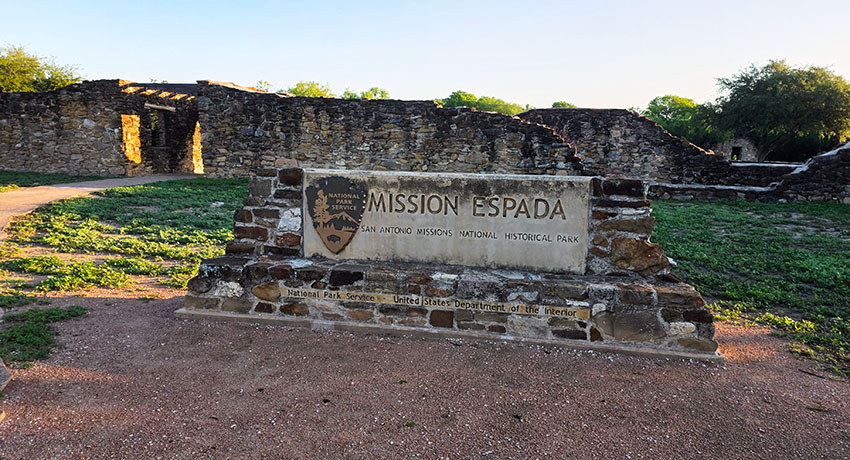
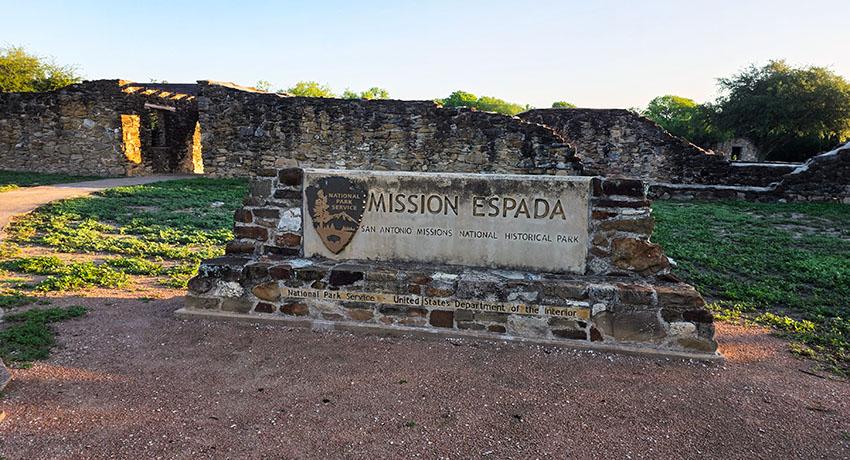
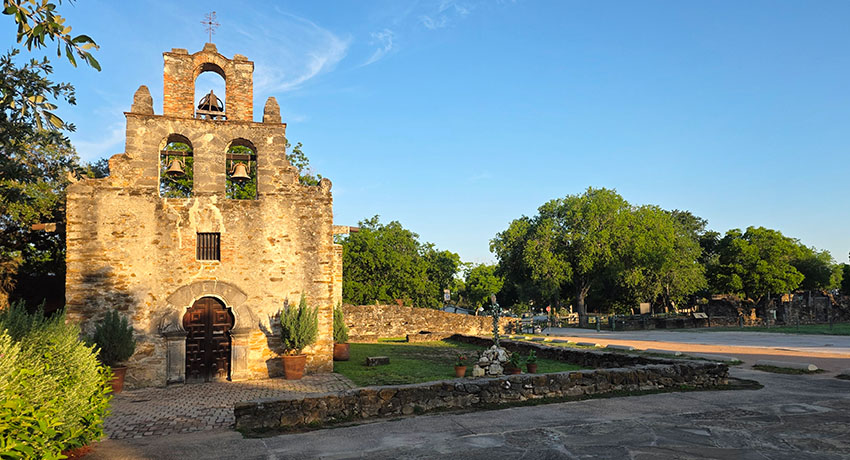
I decided to start at Mission Espada, which is the southernmost mission on the route. I parked my car directly in the Mission Espada parking lot, which made logistics simple later in the day.
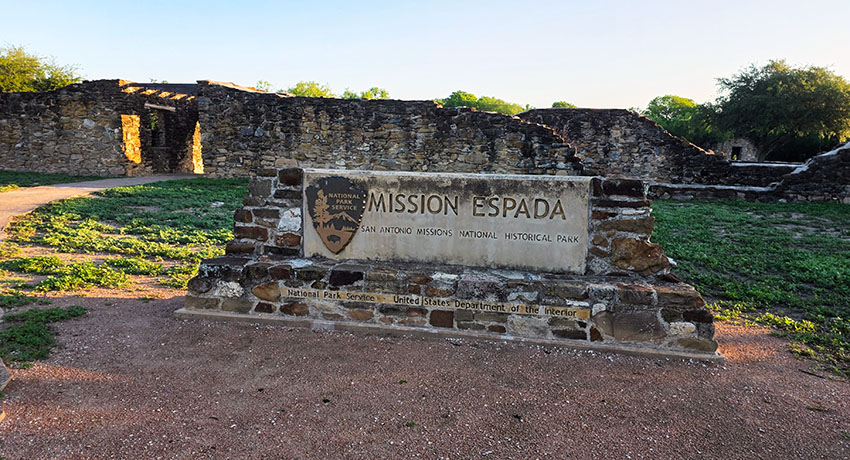
One important thing to know is that the missions themselves do not open until 9:00 AM. Because I started early, I was able to walk around Mission Espada and Mission San Juan while they were still closed, but I could not go inside the churches or visitor areas.
That said, the early morning light around the missions was beautiful, and the cooler temperatures made the earlier start worthwhile.
What the Trail Is Actually Like
The route itself is very easy to follow.
Most of the walk takes place on a paved walking and biking trail that runs alongside the San Antonio River.
It’s flat, well maintained, and shaded in some areas. Occasionally, you leave the river trail briefly to reach one of the missions, but these detours are clearly marked.
Unlike the Camino de Santiago in Spain, there are no yellow arrows or scallop shell markers every few hundred feet. However, it would be extremely difficult to get lost. There are also maps posted periodically along the trail showing where you are.
Overall, navigation was one of the simplest parts of the entire experience.
Water and Food: Be Prepared
This was probably the biggest surprise for me.
Between Mission Espada and Mission Concepción, there are essentially no places to stop for food or drinks.
There are a few public parks and water fountains along the trail, but you absolutely should not count on frequent places to refill water or buy snacks.
If you do this walk, I highly recommend:
- Carrying plenty of water
- Wearing sunscreen and a hat
- Bringing snacks
- Starting early
The route itself is not physically difficult because it’s flat, but the Texas heat makes the experience much more demanding than the mileage suggests.
Getting the Pilgrim Passport and Stamps
I picked up the official pilgrim passport at Mission Concepción for $5.
One very convenient detail is that Mission Concepción had stamps available for all of the missions. So even though I arrived at some missions before opening time, I was still able to complete my credential later.
From Mission Concepción, it’s about another 3.5 miles to San Fernando Cathedral downtown, where you receive the final stamp in the cathedral gift shop.
Finishing the Route
After finishing at the cathedral, I took a taxi back to my car at Mission Espada. The ride cost about $20 and was quick and easy.
From there, I drove back to Mission Concepción to receive:
- The official Camino de San Antonio certificate
- The certificate granting 30 kilometers of distance credit toward the Camino Inglés in Spain
For Camino pilgrims considering the Camino Inglés someday, this is a pretty unique bonus.
Is It Like the Camino de Santiago?
Honestly, not really.
This is not a Camino experience like the Camino de Santiago in Spain.
There are no places to stay, medieval villages, cafés every few miles, or rural trails shared by pilgrims from around the world. But I don’t think it’s trying to be that.
The Camino de San Antonio is more of an urban pilgrimage walk that combines history, faith, and a full day outdoors along the river trail system.
Despite the heat and miles of pavement, it still felt rewarding to spend the day walking between the missions and ending at the cathedral downtown. Plus, after 13 miles in the Texas sun, the margaritas on the River Walk afterward were absolutely deserved.